5305-B Lee Highway | Arlington | VA 22207
703-534-0800
 
301-469-0002
 
202-216-9797
  Pittsburgh Metro Area
412-288-5660
 
Manufacturers | References | Insurance Recovery | FAQs | Blog
   
Please Make a Selection:
Name: Email:
Phone: City:
Address:
Comments:
 

Search

Archive

Categories


Blog

Boost Your Curb Appeal with New James Hardie HardiePlank Designer Siding

James Hardie Fiber Cement HardiePlank Design Collection

HardiePlank® Design Collection
Design is what distinguishes a new exterior from just new siding.
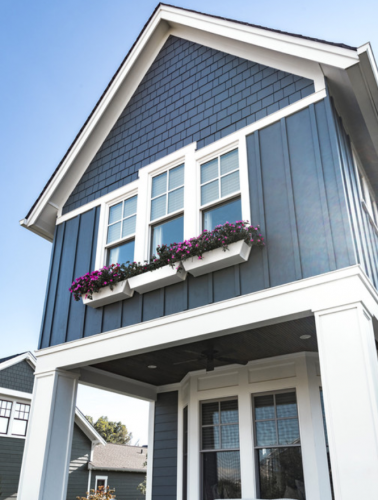
For the homeowner who wants their home to stand out — James Hardie has introduced the HardiePlank® Design Collection. 4 unique lap siding profiles that impart style with personality for your exterior.

Designer Profiles

Don’t Just Replace Your Siding – Have Colonial Remodeling Design Your Home’s Exterior
For the homeowner who wants their home to be exceptionally unique — James Hardie now offers the HardiePlank® Design Collection – available for your exterior remodeling from Colonial Remodeling serving VA, MD, DC. Four handsome, lap siding profiles that transform your exterior with individuality.
Custom Beaded and Custom Colonial are both available with rich wood-like textures. And for the design trendsetter — both are also available in modern smooth finishes for a polished look that enhances your architecture.

  • Custom Beaded
 – Inspired by popular siding styles in coastal communities up and down the Eastern seaboard, Custom Beaded Cedarmill© provides a subtle, breezy accent to your exterior.
  • Custom Colonial™
 – Custom Colonial™ is James Hardie’s take on the traditional dutch lap siding seen in historic communities throughout the the south.


All products in the HardiePlank®  Design Collection are manufacturered with HZ10 product technology and are backed by a 30-year, non-prorated warranty.

For the ultimate in low maintenance, choose your complete exterior with ColorPlus Technology, a multi-paint finish applied in their factory – warranted for 15 years of worry-free living. All 4 Design Collection profiles are available with ColorPlus®  Technology. Contact Colonial Remodeling, the #1 James Hardie Preferred Remodeler in the Washington DC Metro Area*, today for your new siding – either from the traditional series or DESIGN your exterior with the new, distinguished profiles from James Hardie®  – the leader in fiber cement siding – #1 Return on Investment for home improvement.

Stand-Out Designer Exteriors from James Hardie


*Colonial Remodeling is rated the #1 James Hardie® Preferred Remodeler in Northern Virginia, Maryland and Washington DC. No other remodeling contractor has installed more James Hardie® HardiPlank® siding in the Metro Area – a  job that speaks of quality every time!. 

They have the highest customer satisfaction rating for James Hardie® remodeling projects on Guild
Quality surveying service. 

James Hardie #1 Preferred Remodeler


Posted in Colonial Remodeling, Siding & Trim | Tagged , , , , , , , , , , , , , , , , , , | Leave a comment

Planning a House Addition

Consider Several Things When Planning Your Design

A home addition can mean the difference between just adding more space and adding a whole new dimension to your lifestyle – so plan and choose your remodeler carefully. Consider all the options for this important undertaking – reach for quality, not just quantity. Colonial Remodeling is your best home improvement contractor choice in Virginia, Maryland & Washington DC for a home addition and/or house renovation.
List Your Goals
Start collecting pictures and ideas for your dream house. Magazines and the internet are a great place to start. Then consider your budget. You may have to pare down your wish list to be realistic but go for some style. What are the problems you’re having now with your living space? No place to eat in the kitchen? No room for guests? No space to get away and enjoy your pastimes in? Mostly you need more space but you may want better indoor to outdoor access for entertaining. When you know what you’re lacking in your home, prioritize the improvements and Colonial Remodeling can create a design based on your ultimate “affordable” addition.
Restrictions
Things like how close a structure can be built near your property lines, design covenants, historic district preservation ordinances, height restrictions can dictate what you can and can’t do with your addition. Colonial Remodeling will expertly pinpoint these in the beginning so planning isn’t deterred.
Be Broad-Minded
Consider the addition with an open mind. Possibilities that you never even thought of can be presented by Colonial Remodeling that can make the most of your new space. Don’t get stuck trying to not move a wall or a little plumbing and hurt the chances of a much more exciting design evolving. Colonial Remodeling’s team of expert designers and craftsmen will present great solutions that will “surpass your expectations”.
Repurpose Lost Space
Is there a closet filled with junk you haven’t opened in years or a bedroom that no one uses that could become a new walk-in closet or master bath – or a drab porch that could become a new kitchen dinette or entertainment or garden room? Consider reworking all your adjacent, unused space into something special. Decreasing the foundation in an addition most likely will work more efficiently with your remodeling budget. Sometimes a few extra feet can really make all the difference in a room.
Don’t Do “The Box”
Take this opportunity to add a structure that enhances your house not just enlarges the footprint. This is a good time to create an addition that is a delight to look at-  with dynamic architectural features, higher ceilings, curved walls – break up the straight lines for more interest and charm.
The Addition That’s Always Been There
Make sure you strive for a design that adds something new but not so new that it looks like an “add-on”. Your exterior should blend with the existing materials and architectural style of your home. If you can’t match your current exterior brick – consider adding James Hardie fiber cement siding or shingles or the new stone veneer to “zag” when you can’t “zig”. Don’t do modern windows if your house is vintage. Working with the style of your home (that you loved it for in the first place) can keep your design in harmony.
Respect the Roof
If your home has an interesting roofline consider keeping the interest going with your addition or if you’re also adding an entranceway – repeat it on a smaller scale.
Details, Details
Try to blend your door & window hardware, trim style, lighting fixtures, moulding- even your gutters so your addition merges naturally into the existing structure.
Proportion and Balance
Don’t add a giant addition onto a tiny house that makes it lopsided – or a tiny addition with chopped up space that you’ll never enjoy or get full use out of just because you’re trying to get more “rooms”. One well-planned room is better than several that don’t offer ample living space just because you’re trying to cross off items on your needs list.
Study the View with a Discerning Eye
An addition should be as beautiful to encounter inside as well as outside but also the view from your house’s existing windows and your yard is important. Make sure that your design will look good from all angles, & not block existing enjoyable vistas or dilute privacy – yours or your neighbors.

Ready to start? Colonial Remodeling can build that addition on your home you’ve always fantasized about – within budget and quality-built with all your goals met and more. Contact us today in Virginia, Maryland or the Washington DC area for your free estimate and consultation..for a more beautiful, spacious home.

Posted in Additions, Colonial Remodeling, Design & Architecture | Tagged , , , , , , , , , , , , , , | Comments Off

What’s Your Home’s Architectural Style?

What Style House is Your Home

When people look to remodel their homes, they know they need more space or curb appeal but if they’re adding features and style they may not know which features would enhance , not detract, from their architectural style.

There are many popular styles of homes in the Washington Metropolitan Area – with architecture as diverse as its residents. Being educated about which style of home you have can help you research tastefully-remodeled homes similar to yours and give you a head start at determining your design.

Here’s a short list of the most iconic styles you’ll see around Virginia, Washington DC, or Maryland. Very few homes these days are strictly one style but mixes:

Cape Cod Style
The simple, rectangular homes popular in 20th century suburbs originated in Colonial New England back in early Colonial days. The original Cape Cod house was a simple, one-story structure with a single chimney in the center.

Federal and Adam House Styles
Graceful detail make this a popular house style originating in the late 18th century. Woodlawn, near Mount Vernon VA with its fanlight and elliptical windows in the gable is a good example of a Federal design.

Folk Victorian
Affordable and simple, these North American homes, became a popular style around the turn of the 20th Century. Square and symmetrical in shape they usually had porches embellished with spindle work or flat jigsaw cut trim.

Queen Anne Victorian 
This Victorian era popular style had round towers and wrap-around porches give Queen Anne houses a regal air.

Shingle Style
Another turn of the century design is the Shingle Style home. Architects who didn’t like Victorian fussiness designed rustic Shingle Style homes, popular in the Northeastern United States between 1874 and 1910.Rambling and asymmetrical Shingle Style homes are a popular look along the Eastern Shore.

Colonial Revival
The Colonial Revival style is based loosely on Federal and Georgian house styles, and another architectural rebellion against excessively elaborate Victorian Queen Anne architecture. Between World War I and II, Colonial Revival was the most popular historic revival house style in the United States.

Tudor
Tudor style houses usually feature striking decorative half-timbering and suggest a look associated with Medieval times. They may have overlapping gables, parapets, and beautifully patterned brick or stonework. These historic details sometimes combine with Victorian or Craftsman flourishes. Tudors can be simple cottages or mansions.

Prairie Style
1893-1920. Frank Lloyd Wright transformed the American home when he began to design “Prairie” style houses with low horizontal lines and open interior spaces.

American Foursquare
The American Foursquare, or the Prairie Box, was a post-Victorian style that shared many features with the Prairie architecture pioneered by Frank Lloyd Wright. The boxy foursquare shape provided roomy interiors for homes on small city lots. The simple, square shape also made the Foursquare style especially practical for mail order house kits from Sears and other catalog companies. They were frequently dressed up with features from other styles.

Arts and Crafts (Craftsman)
The word “Craftsman” came to mean any house that expressed Arts and Crafts ideals, most especially the simple, economical, and extremely popular Bungalow. The word bungalow is often used for any small 20th century home that uses space efficiently. However there are particular features we associate with bungalow architecture in the USA. A Craftsman house is often a Bungalow, the truest form of American Arts & Craft architecture – but many other styles can have Arts and Crafts, or Craftsman features. From cozy bungalows to sprawling Prairie houses, many American homes were shaped by Craftsman ideas and modified to fit the climate of the area they were built in. (The name bungalows, although quite American,  has its roots in India. In the province of Bengal, single-family homes were called bangla or ban gala.)

American Bungalow are usually 1 and a ½ stories, living room at center with connecting rooms, no hallways, built-ins.

Ranch Style
(variations are Raised Ranch and Split-Level)

From 1945 to the 1980′s the Ranch Style was popular across the United States with each region having its particular style. A Ranch is a very simple, one-story styled house sometimes with a rambling layout, large windows, attached garage with an emphasis on openness and efficient use of space. They usually don’t have much in the way of decorative detailing aside from shutters. They are generally built with natural materials like brick, stone and wood with oak floors. Raised and Split-Level ranches are 2 levels and often have walk-out basements. Most likely you must walk up steps to the front door.

Builder’s Colonial / Neocolonial
1965-Present. Neocolonial, or Builder’s Colonial, houses incorporate mixture of historic styles adapted for contemporary lifestyles. New England Colonial, Southern Colonial, Georgian, and Federal details are imitated using low-maintenance modern materials. The idea is to convey the traditional, refined atmosphere of a Colonial home, but not to recreate a Colonial style.

Unlike the earlier Colonial Revival homes, the interiors of Neocolonial, or Builder’s Colonial, homes have the latest and greatest with great rooms, high-tech kitchens, and other conveniences.

Neoeclectic Houses
1965-Present. A longing for a more traditional style influenced the design of modest tract housing in North America. Builders began to offer traditional, Neoeclectic (or, Neo-eclectic) houses that were “customized” using a mixture of features. These homes are sometimes called Postmodern because they mix styles – critics use the term McMansion to describe a Neoeclectic home that is over-sized and pretentious.

Contemporary
1965-Present. Contemporary homes are usually irregular in shape and are designed for today’s lifestyles with huge, modern windows and large, open spaces.

So, recognize your home from these descriptions? You may not if your home has had a few owners who added their own personalities to the look along the years – but we can help.  When you have your ideas together, bring them to Colonial Remodeling. Our designers can turn your concept into a remodeling with the right features, the correct architectural elements that will all come together for a more beautiful home addition, entranceway, exterior upgrade, windows and trim  - inside and out. Visit our different photo galleries and see if you can recognize the different styles of homes – then contact Colonial Remodeling, Today’s Remodeling Experts.


Posted in Additions, Colonial Remodeling, Design & Architecture | Tagged , , , , , , , , , , , | Comments Off

Colonial Remodeling Wins Angie’s List Super Service Award 2011

Colonial Remodeling is proud to have won the Angie’s List Super Service Award for 2011.

Each year, Angie’s List presents its Super Service Award to businesses that have maintained a superior service rating. Approximately 5% of busineses on Angie’s List meet the eligibility requirements.

Colonial Remodeling values its excellent reputation as a contractor in the Virginia, Maryland and Washington DC area. Good ratings with services such as Angie’s List and customers that take the time to spread the word are part of our success. If you are a past, satisfied customer and a member, please be sure to rate us the next time you’re visiting Angie’s List to find reputable companies such as ours. Thank you in advance.

If you’ve ever had a valid problem with our work or service, Colonial Remodeling would like to know about it. Contact us any time to discuss any issues with work or our team’s service and we will make every attempt to resolve them and keep them from happening in the future.

The finest craftsmanship in a job we can be proud of and happy customers that trust us with their important remodeling projects are our ultimate goal. Thanks for helping recognize our efforts in the industry. Want to learn more? See more testimonials on our website…

Posted in Colonial Remodeling | Tagged , , , , , , , , , | Comments Off

Fiber Cement Siding Replacement -#1 Return on Investment- Again

If you’ve got a bevy of ideas for improving your home for the new year but don’t know where to start, Colonial Remodeling is happy to share some smart suggestions:

James Hardie HardiPlank Fiber Cement Siding

Fiber Cement Siding Replacement is the #1 Return on Investment (according to Remodeling Magazine’s Cost vs Value Report for 2011-2012). This is for the 6th straight year. No other home improvement comes close. In the Washington DC Area Foam-backed siding is similar in cost yet you’ll receive 12.5% less in resale value.

Colonial Remodeling is one of the few Preferred Remodelers for James Hardie in the entire region. We always recommend HardiPlank as a superior siding product that will protect your home and update your curb appeal like none other because our goal is long-term customer satisfaction. There are so many smart ColorPlus® Technology Colors to choose from – that will be the one area you’ll have a hard time deciding but our experienced designers will help you find that right combination for your home.

Tight-Cut - Terra Rosa

Versetta Stone™ Veneer Panelized Siding. Want to add a little contrast in texture to your new siding replacement? Add an accent of the new stone veneer with an upscale, authentic-looking masonry appeal. It’s beautiful and looks like a stone worker spent months constructing it but it’s actually quickly installed in light panels. It’s from Owens-Corning™ with a 50-year limited warranty so you know it’s a quality exterior product.

So you’ve finally decided to start with a facelift for 2012 (for your home)? This is a great year to contact the Best Choice for Exterior Remodeling in Virginia, Maryland, Washington DC, Colonial Remodeling.

Posted in Colonial Remodeling, Siding & Trim, Stone Veneer | Tagged , , , , , , , , , , , , , , , | Comments Off

Fiber Cement Siding & Stone Veneer – Made for Each Other

James Hardie Siding & Versetta Stone Exterior

Colonial Remodeling recently remodeled a home in Annandale, Virginia that is a handsome example of what a new exterior of James Hardie® fiber cement siding coupled with Versetta Stone®  panelized stone veneer can do to improve a home’s value- and optimize its curb appeal at the same time.

The home was formerly clad in EIFS (Insulated  Synthetic Siding).Most EIFS from the 80′s era didn’t have a drainage system is now showing up as trouble for a lot of homes after years of trapping moisture and causing structural damage. James Hardie siding and Versetta Stone both are engineered for long-lasting performance with state-of-the-art technology.

The extra plus is that Colonial Remodeling’s highly-trained experts install home exteriors the right way with a maximum-performing weather barrier wrap that gives another wall of protection against the elements by providing a balance of water resistance and breathability. Colonial additionally insulates the structure with rigid foamboard that makes a noticeable difference in your heating and cooling bills and the comfort of your home.  (see the Colonial Remodeling Siding & Trim Quality Checklist),

Colonial Remodeling, a full-service remodeler, also added the welcome space over the garage as well as a rear addition to make room for a new modern kitchen and spacious master suite on the second level with sitting room and luxurious master bath.

Don’t just replace your exterior – renew your home’s good looks with quality products expertly installed by Colonial Remodeling. Improving homes in Northern Virginia, Maryland & Washington DC with style and dependability since 1996.

James Hardie #1 Preferred Remodeler

Master Bath in New Home Addition

Posted in Additions, Colonial Remodeling, Siding & Trim, Stone Veneer | Tagged , , , , , , , , , , , , , , | Comments Off

Hail Resistant Residing with James Hardie Fiber Cement

Colonial Remodeling Free Estimate

If you were pounded by one of the hail storms this year you may have had damage to your home. Lots of our neighbors in Northern Virginia, Maryland, and DC contacted Colonial Remodeling for a Free Hail Inspection. If you have seen our signs posted around, chances are you have had some damage like your neighbors. Haven’t quite got around to doing something about it?  Here’s some really good reasons to get your siding replaced right with James Hardie® Fiber Cement siding like HardiePlank®, HardiePanel®, & HardieShingle®:

  • JH Siding resists rotting, warping, cracking, hail, and high winds up to 150 mph. Due to its impact resistance against hail and windblown debris, fiber-cement siding has been specified by hurricane-zone building codes for building homes in hurricane-, tornado-, and wildfire-prone areas.
  • James Hardie® fiber cement siding is 5x thicker than vinyl, providing more durability and protection for your home. Even premium vinyl siding is only 5/100″ thick.
  • Re-siding with fiber cement gives you the best return on your investment 6 years in a row. (Remodeling Magazine ) “The #1 return on investment and superior siding value for remodeling projects”.
  • How materials stand the test of time is another consideration. Nobody likes the extra cost of long-term maintenance. Wood, for example, needs upkeep – at best, paint, and at worst, replacement if the elements or insect infestations cause rotting. Wood is more expensive than fiber cement  - or vinyl (which can be damaged by hail, limbs, and other flying debris).
  • Lower homeowner insurance premiums (14% lower on average) compared to vinyl siding.  (Actual cost savings may vary. Based on average insurance costs of $1,900 a year.)
  • Up to a 30-year limited transferrable product warranty, as well as a 15-year finish warranty covering both paint and labor.
  • Famous James Hardie® Curb Appeal. Several stylish colors to choose from and the quality is undeniable.
  • It doesn’t cost anything for a Free Estimate from Colonial Remodeling, Northern Virginia’s only Certified James Hardie Insurance Recovery Specialists.

The Durable Quality of James Hardie Fiber Cement Siding

Enough cold, hard facts for you? The one thing we can predict: the next big storm is always just around the corner and now is the time to reside.  (In Spring 2011 Saltville, VA recorded an unofficial hail stone of 4.5″).

Protect your home with the superior siding, James Hardie® Fiber Cement  - and get it installed by the best, Colonial Remodeling.

Posted in Colonial Remodeling, Siding & Trim | Tagged , , , , , , , , , , , , , , , | Comments Off

An ADA Compliant Addition for an Easier-to-Navigate, Safer Home

Ada Compliant Entranceways

If you’re a senior citizen, have a family-member with a disability, or have had a health setback and can’t get around like you used to, you may be challenged by the layout of your home. An ADA Compliant addition is the answer to your dilemma.

Perhaps it isn’t you but an elderly parent who requires a little help but needs to remain independent to have a better quality-of-life. Making small modifications or adding an entire special-needs addition to your house can make a huge difference in that person staying mobile and peace-of-mind for you in having a safer home from slips and falls – and it’s easier to maintain.

Here are some of the improvement features Colonial Remodeling can make:

  • custom countertop height adjustments
  • wider doorways
  • grab bars for stability
  • heated exterior ramps for comfort
  • barrier-free bathing
  • stairlifts and elevators to eliminate stairs
  • automatic opening/closing doors for hands-free entranceways
  • widening pathways outside for walkers and wheelchairs

So whether you’re in need now and just wish you had an easier to navigate home to remain independent – or just a smart planner for the future – Colonial Remodeling can make ADA-Compliant adjustments to your home and it will become more beautiful (and valuable) for it.

PS: It certainly beats the cost of an expensive retirement home – and more importantly-  it’s yours.
Contact Colonial Remodeling today if you’re in Northern Virginia, Maryland, or Washington DC, we’re the experts in ADA Compliant Home Improvement! 


Posted in Additions | Tagged , , , , , , , , , | Comments Off

Porticos: A House Exterior’s Work of Art

When you’re looking for that finishing touch on your home contact Colonial Remodeling about designing and building a Portico for you. The architectural flavor of your portico can add Curb Appeal like no other house feature. The architectural lines, the elemental details,

the warm ambiance all add up to an eye-catching work of art that makes your home stand out from the rest of the neighborhood. The style of a portico can be elegant, simple, impressive, quaint – it’s just a matter of taste. Study the architecture of your home for guidance and see which porticos or entranceways catch your attention.

Colonial Revival

A Colonial Revival Portico


follows the style of earlier Federal style: elliptical fanlight, sidelight, and arched portico with hanging lantern are a very popular combination. Simple Tuscan columns allow you to focus on a special door.


Portico with Flared Roof


Portico with Flared Hip Roof

The best portico design is one that makes the structure look like it’s always been there. Incorporating the portico with the roofing materials and moulding details already there blends the two together seamlessly. Add a mini-porch with stone steps and easy-care engineered decking materials for the porch floor and you have a charming place to linger. A flared roof adds an interesting line to the otherwise straight lines of the home.


Classic Portico.
A lovely brick path leads up to an important entranceway with heavier columns. The sidelights and transom give the house an open feeling and ties into the divided-light windows of the home. Electrical package welcome family (and neighborhood visitors) alike.

Classic Portico with Transom and Sidelights

Bring your ideas to Colonial Remodeling and make your residence a masterpiece. Be sure to browse our “gallery” to see more…


Posted in Porticos & Entranceways | Tagged , , , , , , , | Comments Off

Hurricane Aftermath: Home Damage

Damage Check Post-Hurricane

Hopefully, most of you came through Hurricane Irene without any significant damage. In Northern Virginia, Maryland and Washington DC: thousands were without power and the storm’s high winds and rain brought down 100′s of trees -many that involved power lines.

If your siding has been damaged we recommend James Hardie® fiber cement Hardiplank®, Hardipanel®, Hardisoffit® for replacement.

Due to its impact resistance against hail and windblown debris, fiber-cement siding has been specified by hurricane-zone building codes for building homes in hurricane-, tornado-, and wildfire-prone areas. It can withstand hurricane

Fiber cement sided house in Mississippi which survived Hurricane Katrina

force winds up to 150 mph (3-second gust) provided the installation conforms to proper installation methods found within the NER-405 or Miami-Dade County Florida NOA 07-0418.04.

The weather may be beautiful today but did your home make it through with flying colors or are you concerned about next time? If you see debris scattered on your lawn like roofing shingles, trim, or siding your exterior may have been weakened or damaged by the storm. If a tree limb or entire tree made contact with your home it’s best to have it checked out to see if there was any structural damage. Colonial Remodeling is experienced in accessing damage to homes for insurance claims related to storms so we are waiting to hear from you.

Your home or place of business is probably built in accordance with local building codes that consider the effects of minimum, “code-approved” design winds for your area. Building codes require that buildings be able to withstand a “design” wind event. In most tornado-prone regions, the building code design wind event is a wind event with 90 mph winds. For hurricane-prone areas, design wind events in the code range from 90 to 150 mph. A tornado or extreme hurricane can cause winds much greater than those on which local code requirements are based. Having a home built to “code” does not mean that your home can withstand wind from any event, no matter how extreme.  FEMA 320, Third Edition / August 2008
Posted in Colonial Remodeling, Insurance Recovery, Roofing, Siding & Trim | Tagged , , , , , , , , , , , , , , | Comments Off


We Stand Behind Our Work to Guarantee Your Complete Satisfaction

-
About Us
 
Links
 
Contact Information
Since 1996, Colonial Remodeling's team of designers, craftsmen, and project managers have been remodeling and improving residential homes & commercial buildings with superior standards. We serve the No. Virginia, Maryland, Washington, DC & Westmoreland County, PA Area .Colonial is a family-run and owned contracting business whose primary goal is producing highest-quality remodels with satisfied customers!
VA Class "A" LIC 2705-081772A
MHIC 82360
DC GC 70108025
PA HIC 079493
    Colonial Remodeling
Colonial Remodeling5305-B Lee Highway
Arlington | VA 22207

Phone:

VA: 703-534-0800
MD: 301-469-0002
DC: 202-216-9797
PA: 412-288-5660